Water Conservation
Water Conservation


Given increasing stressors on climate and more frequent droughts, it is more important than ever to consider the impact of our water usage in science. Lab spaces consume four times more water than equivalently sized office spaces, and make up a significant portion of a university's water usage and utility costs. Some of these applications are unavoidable, but there are steps that can be taken to reduce the water consumption of your lab without impacting research.
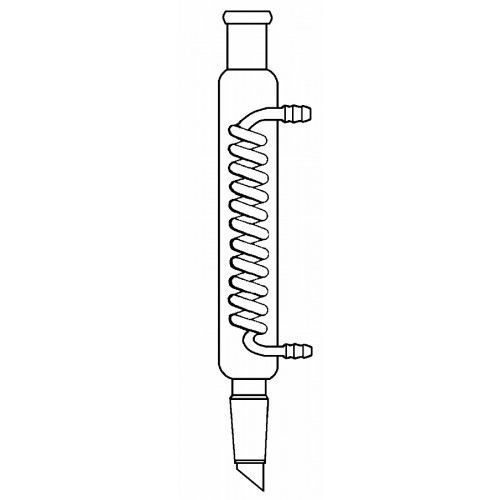
Tell us about your lab water consumption, including your usage of autoclaves or condensers here, and you could be entered to win a $10 gift card for coffee!
Autoclaves are one of the largest uses of water in many research labs, using more than 60 gallons of water per cycle. However, various actions can be taken to reduce the water consumption of your autoclave.


- Only run an autoclave when it is full.
- Shut the autoclave door when it is not in use.
- Maintain and fix the solenoids that control your tempering water flow.
- Solenoids (or water misers) monitor the temperature of your outflow water and control the amount of water required to cool your water to 140° F, which can reduce the water used for this purpose by 75-90%.
- If you hear a gurgling sound when your system is not in use this is likely an indication of a broken solenoid. When this happens the tempering valve can be releasing 2-3x as much water as it should be.
- When considering a new autoclave purchase there are some water efficient features that are important, and often cheaper.
- If you run less than 5 loads a day, consider a research-grade non-jacketed autoclave instead of a medical-grade steam-jacketed autoclave. These systems use 90% less water and are 10-30% cheaper than steam-jacketed autoclaves.
- Consider a system that requires a lower degree of water purity or a system that can recycle the outflow water.
- Talk to your autoclave technician to see if the following options are available on your unit:
- Some modern autoclaves can be turned off when you are not running it, such as at night or on weekends. Every hour an autoclave is not on saves 10 pounds of steam and 90 gallons of water!
- If you cannot turn off your autoclave, see if you can implement standby mode when the system is not in use.
- Disable vacuum pump cycles when appropriate.
Single-pass cooling in labs can result in the usage of 13,000 additional gallons of water every year.

- When possible, exchange single-pass cooling systems for closed-loop systems, chillers, recirculating water baths, or air condensers.
Minor modifications to behavior can lead to significant water savings! Leaks that drip once per second can waste 3,000 gallons of water in a year.
Check and report leaky faucets through a Facilities Service Request.


- Post signage near sinks about water conservation.
- Only run water-intensive equipment (autoclaves, glassware washers etc.) with full loads.
- Regularly check valves on equipment that is connected to main water lines.
You can achieve the same results with less water by reducing the flow rate in some non-critical applications.

- Install low-flow aerators on sink faucets. These devices are very affordable and can reduce your flow rate from ~4 gal/min to < 1.5 gal/min.
- Choose the lowest appropriate flow rate for equipment based on manufacturer specifications. For example, if a device requires 1-3 gal/min, make sure if is set to 1 gal/min.
It takes a significant amount of water and energy to purify water to the various qualities needed for research purposed. For example, it takes 3 gallons of tap water to make 1 gallon of deionized (DI) water.

- Only use the appropriate grade of purity required for a task (purified, ultra purified, softened, distilled, or deinionized).
- Use tap water for the bulk of dishwashing.
- Consider sharing in-house purification units with other labs.
- Talk to your water purifier technician to see if your lab can minimize the frequency of backwashing the filters used to make filtered water. See if you can install a pressure sensor to monitor when the flow rate is low enough to necessitate a backwash.
When replacing or exchanging a piece of equipment there are some features that can lead to significant water savings for the same performance, and sometimes even cost less!
- Replace liquid ring vacuum pumps or water vacuum aspirators with dry vacuum pumps. Water vacuum system use 15 l/min.
- Consider switching to reusable thermal beads to replace water or ice for a variety of temperature-control activities.
- If in-budget and useful, glassware washers or dishwashers use less than half the water of handwashing glassware.
- When you are replacing an autoclave, consider a research-grade instead of medical-grade unit. These use ~90% less water and cost less than medical-grade system, fulfilling all of the sterilization requirements in most labs.
- Participate in the Green Labs Shut the Sash program. Putting less strain on fume hoods reduces the load on cooling towers that are used to cool and humidify building air, and decreases the water lost to evaporation in fume hoods that use wet scrubbers.
- Establish water conservation goals for your lab space that everyone is willing to work towards.
Further information can be found at:
- My Green Labs website and blog
- Cornell Green Labs
- Stanford water conservation
- University of Georgia water saving initiatives
- EPA Lab Water Efficiency Recommendations
- Water Mizers
Images included graphics found at: